Most relocation guides are written for people moving to a place. Ours had to cover more ground than that. We pulled the actual IRS migration data on Colorado, and while the state gained a modest net 7,000-plus residents in the most recent complete year, that topline number hides some real losses underneath it: Florida, Arizona, Oklahoma, and a handful of other states are each pulling more people out of Colorado than they're sending in. So just as many of our neighbors are figuring out where to go next as there are newcomers figuring out where to land. That's why our relocation guide, and this whole content series, is built for both directions.

What the Data Actually Shows
We didn't want to write another guide full of "everyone's moving to Colorado" claims, so we pulled the real numbers — IRS migration data, cross-checked against moveBuddha's moving-search data and U-Haul's rental data — and built the guide around what they actually show:
California is Colorado's single largest source of new residents, sending more than double the next-closest state — led by Los Angeles and San Diego Counties.
Texas trades more people with Colorado than any other state, in both directions, and still comes out a net gain for us.
Florida is Colorado's biggest net loss overall, but it's really two different stories — retirees heading to Tampa and Fort Myers, while Miami and Orlando actually send Colorado more people than they take.
Denver ranks #8 in the country for Gen Z relocation, according to U-Haul's 2026 data, ahead of Seattle and Houston.
Fort Collins, Boulder, and Littleton all rank among the nation's most-searched move-to cities and "breakout" destinations for 2025.
Whichever direction you're headed, the questions are surprisingly similar: what's this going to cost, what does the day-to-day actually look like, and who do you trust on the other end. That's what the guide is built to answer.
Why We Built It This Way
Every relocation guide we've seen focuses on one direction: people coming in. That makes sense for a lot of markets, but it doesn't reflect what's actually happening here right now. Texas, California, Florida, Arizona, and Illinois are still sending new residents to Colorado every year, and at the same time, a real number of longtime Coloradans are heading to those exact same states, chasing affordability, milder winters, or family.
Whichever direction you're headed, the questions are surprisingly similar: what's this going to cost, what does the day-to-day actually look like, and who do you trust on the other end. That's what this guide is built to answer.
What's Inside the Guide
Where people relocating to Colorado are actually coming from, and why they're coming.
The real cost of living here, no sugar-coating, including what a lot of newcomers don't budget for.
A community-by-community breakdown of the foothills and west metro, so you can figure out which town actually fits your lifestyle.
What's driving longtime residents to leave, and where they're headed.
Mountain living realities most agents won't walk you through: snow removal, well and septic systems, wildfire mitigation, and more.
A 90-day moving timeline you can work backward from.
How our eXp Realty network can connect you with a trusted local agent wherever your move is actually taking you.
The Foothills Aren't One Thing
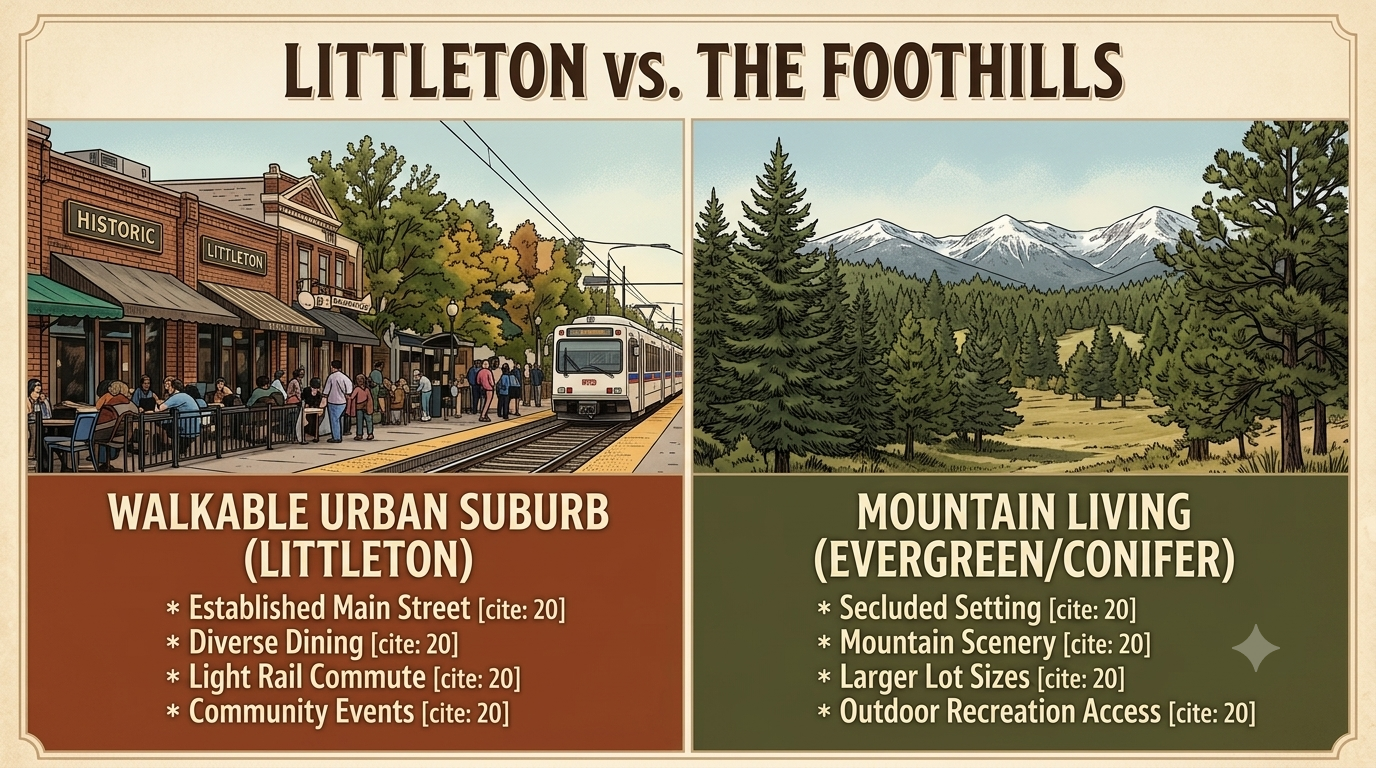
A lot of relocation content treats "Colorado" as a single destination, but Evergreen, Conifer, Golden, Morrison, Littleton, Lakewood, and Arvada are genuinely different from each other — different pace, different price points, different tradeoffs between acreage and walkability. The guide breaks down which communities fit which lifestyle, so you're not guessing based on a name you saw once on a map.
We also didn't shy away from the parts of mountain living that don't make it into the postcard version: well and septic systems, propane delivery, road maintenance agreements, wildfire mitigation, and how altitude actually affects most people for the first few weeks. None of it is meant to scare anyone off. It's meant to save you a rough first winter.
Watch It, Don't Just Read It
If you'd rather see the foothills than read about them, we've been putting together a growing library of relocation videos on our YouTube channel — real walkthroughs of neighborhoods, honest talks about what a move here actually costs, and a look at day-to-day life in towns like Littleton, Evergreen, and Golden. It's the closest thing to a visit before you've booked a flight.
The Part Most Agents Can't Offer
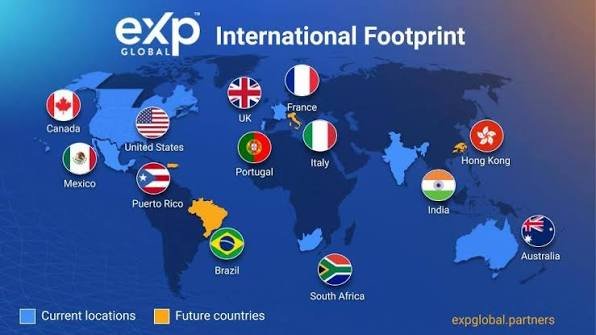
Here's the piece that makes this guide different from anything else you'll find: we're part of eXp Realty's global network of more than 85,000 agents. That means whether you're moving to the Denver foothills or leaving them for Florida, Texas, Arizona, or anywhere else the data shows Coloradans actually heading, there's a strong chance we already have a vetted colleague on the ground where you're going. We don't just hand off your name — we personally connect you, and we stay in the loop until you close.
That's the same standard of service you'd get from us directly, just wherever your move actually takes you.
Frequently Asked Questions
Is Colorado still a good place to relocate to in 2026?
Yes. Growth has slowed from its peak and isn't evenly spread — Colorado is still gaining residents overall, but losing ground to states like Florida and Arizona even as it gains from California and Texas. Denver metro continues to attract transplants, especially in tech, healthcare, and remote-friendly roles, and Gen Z relocation to Denver specifically is picking up.
Do I have to be moving to or from the foothills specifically for you to help?
No. We work with clients across the Denver metro, and our eXp referral network covers destinations nationwide and internationally.
Is there a cost to using your relocation referral network?
No cost to you. Referral arrangements are handled between brokerages.
How far in advance should I start the process?
Ideally 60 to 90 days out, but we've helped clients on much tighter timelines too.
What if I'm still deciding whether to move at all?
That's a completely normal place to start. The guide is built to help you think it through, not to push you toward a decision before you're ready.
Get the Guide
This guide is a starting point, not a substitute for a conversation about your specific situation. Request your copy, watch a few walkthroughs on YouTube, and reach out whenever a question comes up.
Sources: IRS Statistics of Income, State-to-State and County-to-County Migration Data (2022–2023); moveBuddha 2025–2026 Migration Report; U-Haul Growth Index & 2026 Midyear Migration Trends.
Ready to talk through your specific move, in either direction? Reach out to Tim and Sandy Jones at Tim@JonesTeamColorado.com, call or text (720) 314-8462, or schedule a free 15-minute call.