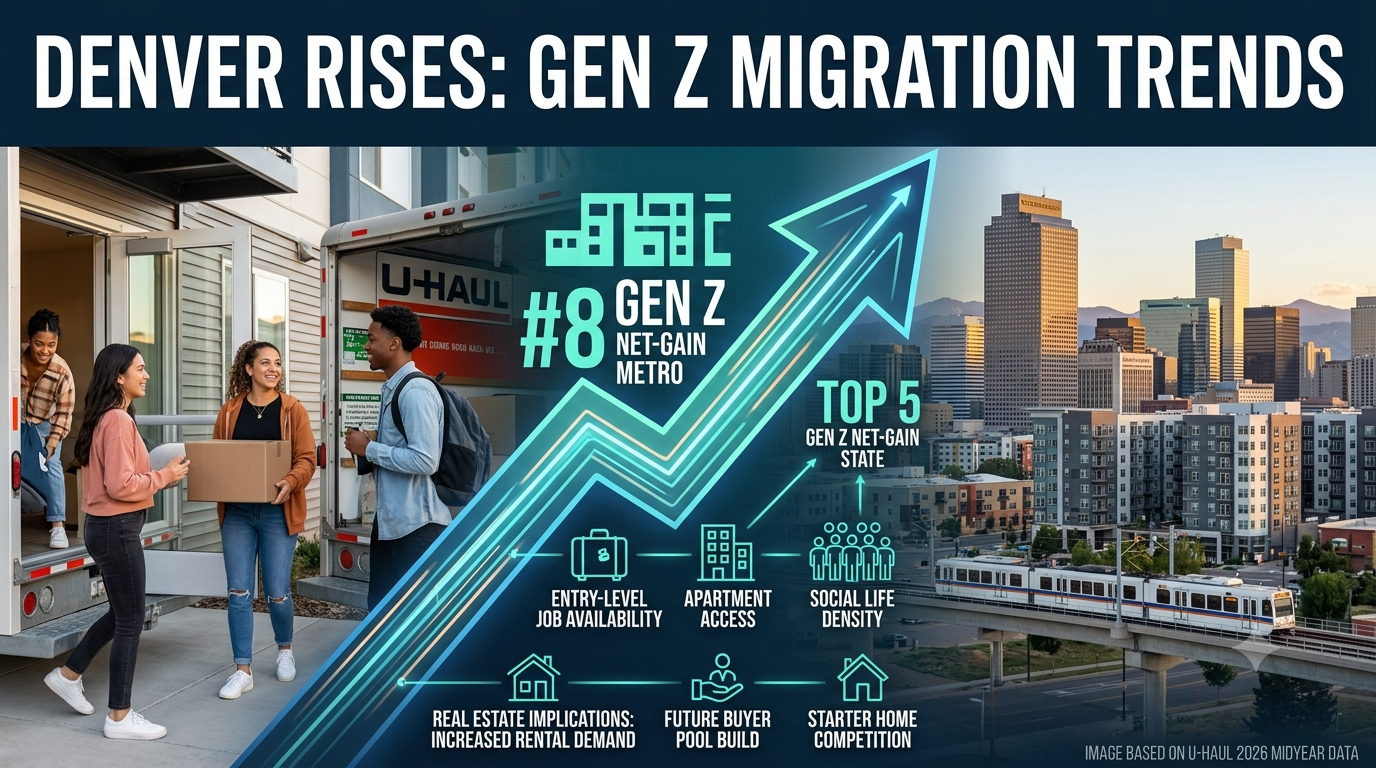
Most of the migration conversation around Colorado focuses on retirees and remote workers in their 40s and 50s. But U-Haul's 2026 midyear migration data, which breaks down one-way moves by generation, shows something that gets less attention: Denver ranks #8 in the entire country among net-gain metros for Generation Z, the cohort born between 1997 and 2012. That puts Denver ahead of Seattle and Houston, and just behind Los Angeles and Austin, on the list of places young adults are actually choosing to move.
Why Younger Movers Are Choosing Denver
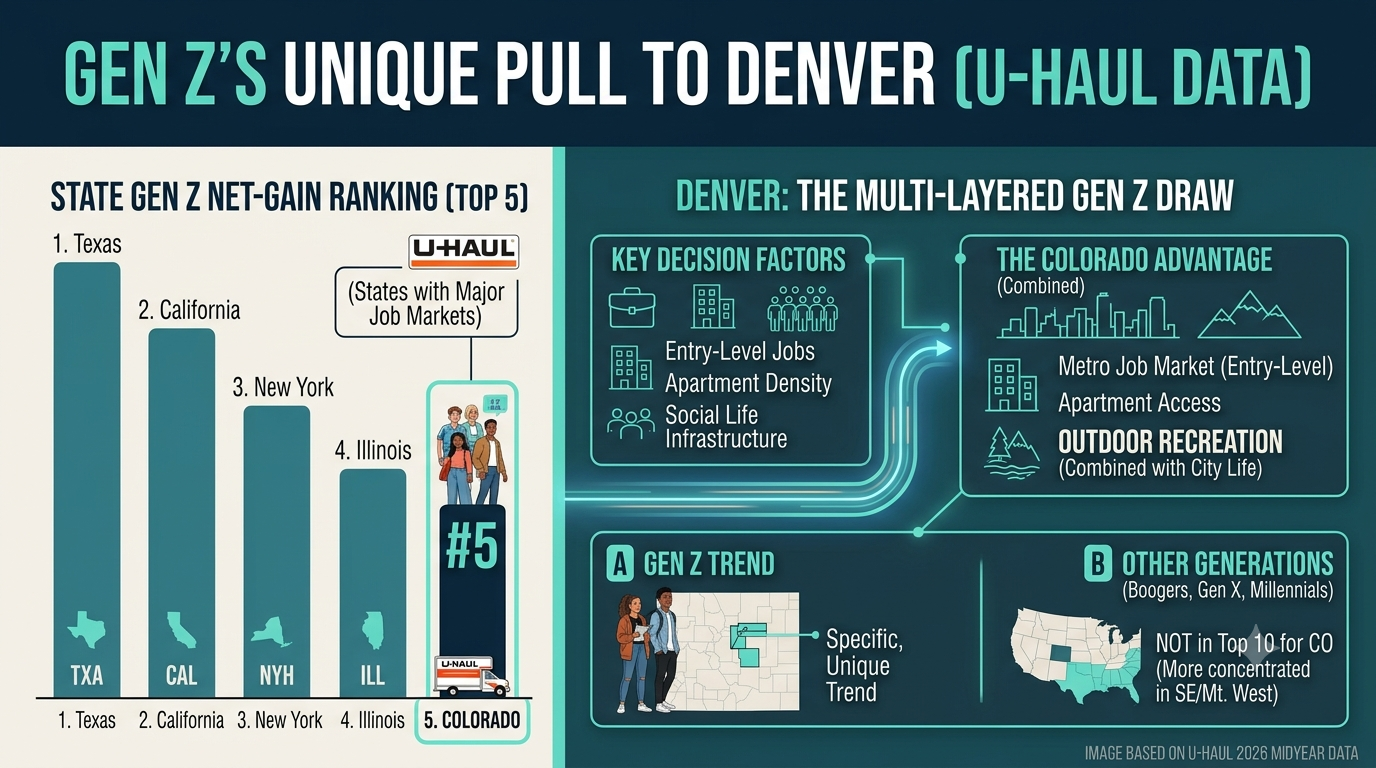
At the state level, U-Haul's data shows Colorado ranking #5 nationally for Gen Z net-gain states, behind only Texas, California, New York, and Illinois — all states with major metro job markets. That's the pattern: this age group is gravitating toward places with entry-level job availability, apartment access, and enough density to support a social life, not necessarily the same mountain-town draw pulling in older movers. Denver checks those boxes while still offering the outdoor access that's part of Colorado's broader appeal — a combination not every metro on that top-10 list can claim.
It's worth noting this is a genuinely different pattern from Colorado's other generations in the same dataset. Colorado doesn't appear in U-Haul's top-10 lists for Baby Boomers, Gen X, or Millennials — those groups are more concentrated in the Southeast and Mountain West broadly. The Gen Z pull toward Denver specifically is its own trend, not just a smaller slice of a state-wide boom.
What This Means for the Housing Market
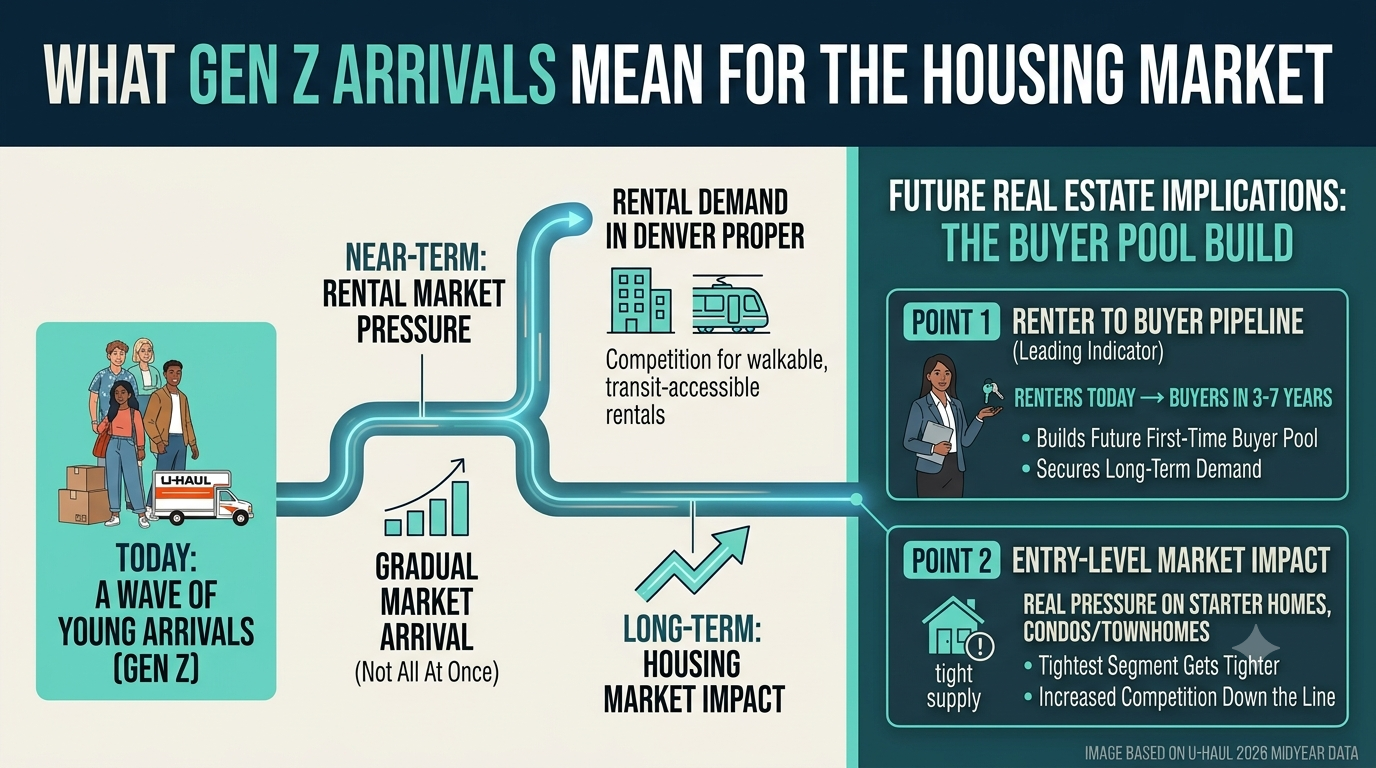
A wave of younger arrivals shows up in the market gradually, not all at once. In the near term, it mostly affects rental demand in and around Denver proper — more competition for apartments and entry-level rentals in walkable, transit-accessible neighborhoods. But it matters for buyers and sellers too, for a couple of reasons.
First, it's a leading indicator. Renters today are often buyers in three to seven years, once they're further into their careers and ready to put down roots. A metro that's consistently attracting young talent is building its own future first-time buyer pool, which matters for long-term demand in starter-home price points. Second, it puts real pressure on the entry-level and condo/townhome segment specifically, which is already the tightest part of many Denver-metro markets — more renters today generally means more competition for starter homes down the line.
Advice for First-Time Buyers Entering This Market

If you're a younger buyer who moved to Denver in the last few years and are starting to think about ownership, a few things worth knowing going in:
Get pre-approved before you fall in love with a listing. In a market with real competition at entry-level price points, knowing your actual number matters more than browsing first.
Don't rule out the west metro suburbs. Denver proper gets the headlines, but Arvada, Lakewood, and parts of Golden often offer meaningfully more home for the same budget, with a still-reasonable commute.
Condos and townhomes are worth a genuine look, not a consolation prize. HOA terms vary a lot — read them carefully, but don't dismiss the category outright.
And first-time buyer programs exist for a reason. Colorado and several local jurisdictions offer down payment assistance and first-time buyer programs that are worth exploring before you assume you need 20% down.
Where These Buyers Are Actually Looking
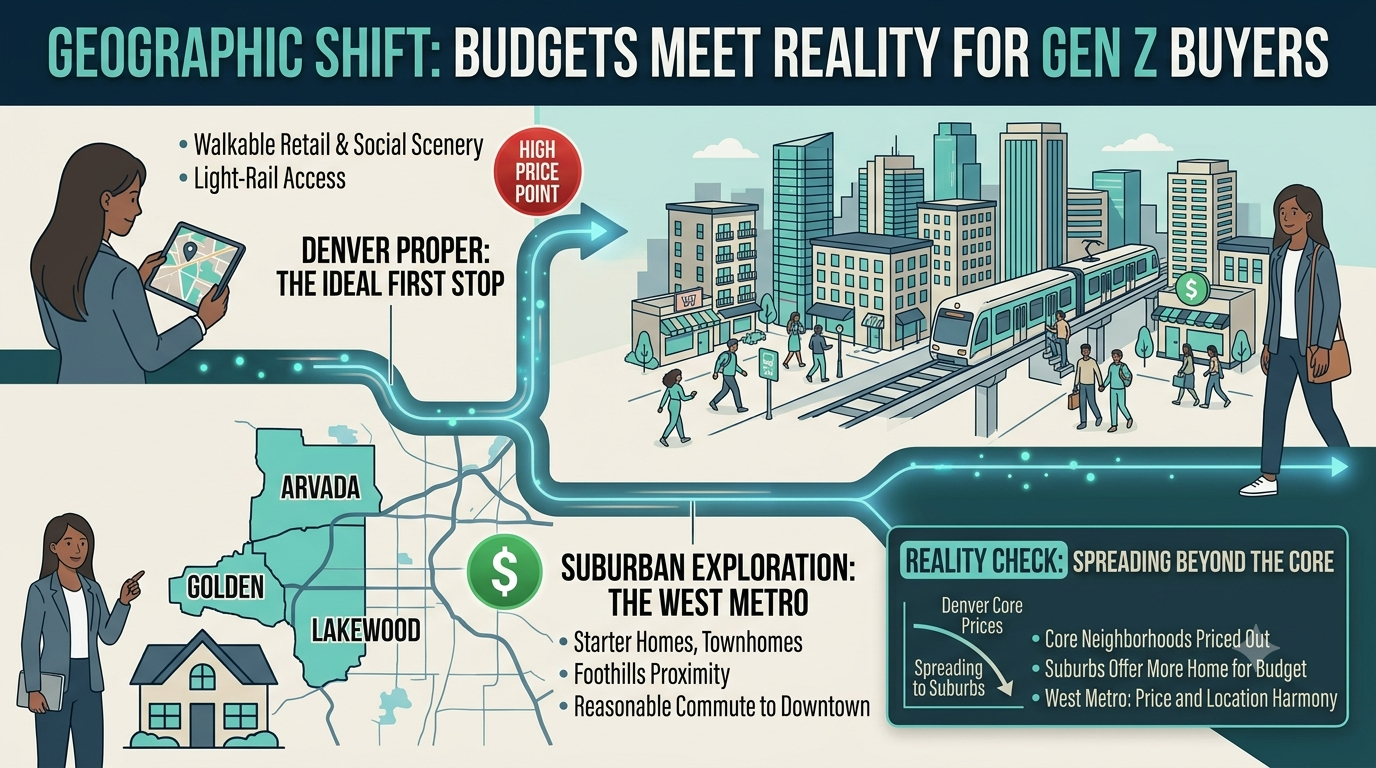
Denver proper — particularly neighborhoods with light-rail access and walkable retail — remains the first stop for most younger arrivals. But as budgets meet reality, we increasingly see this group spreading into Arvada, Lakewood, and Golden, where the west metro's mix of starter homes, townhomes, and proximity to both downtown and the foothills hits a price point Denver's core neighborhoods often can't.
Whether You're Buying Your First Home or Planning Ahead
Whether you're one of the younger buyers this data is describing, or you're a seller in the entry-level segment wondering what's actually driving demand for your home right now, we're happy to walk through what this trend means for your specific situation and neighborhood.
Source: U-Haul 2026 Midyear Migration Trends: National Report, based on one-way U-Haul rentals from July 2025 through June 2026.
Buying your first home in the Denver west metro, or curious what this trend means for your neighborhood? Reach out to Tim and Sandy Jones at Tim@JonesTeamColorado.com, call or text (720) 314-8462, or schedule a free 15-minute call.