The Fed raised its rate last week, and if you're buying or selling in the Denver foothills, you've probably already gotten a text or two asking what it means for mortgage rates. Short answer: less than most headlines suggest. The Fed sets short-term borrowing costs. Mortgage rates follow a different market entirely, and they were already moving before the Fed said a word.
We put together a full video breaking this down, with clips from Fox News and CNBC on where the market stands right now. Here's the written version, for buyers and sellers both.
What the Fed's Move Actually Changes
A Fed rate hike hits short-term borrowing directly. Credit cards. Car loans. Financing on a boat or an RV. Those costs move fast because they're tied to the Fed's rate.
Mortgage rates play by different rules. They track the 10-year Treasury and the bond market, which move on where investors think inflation and the economy are headed. That's why mortgage rates were already climbing before this hike happened, and why they don't drop the moment the Fed cuts, either. If you're waiting for a Fed announcement to tell you what your mortgage payment will look like, you're watching the wrong number.
What the History Actually Shows
Here's a question worth answering with data instead of gut feeling: how often do home prices actually fall?
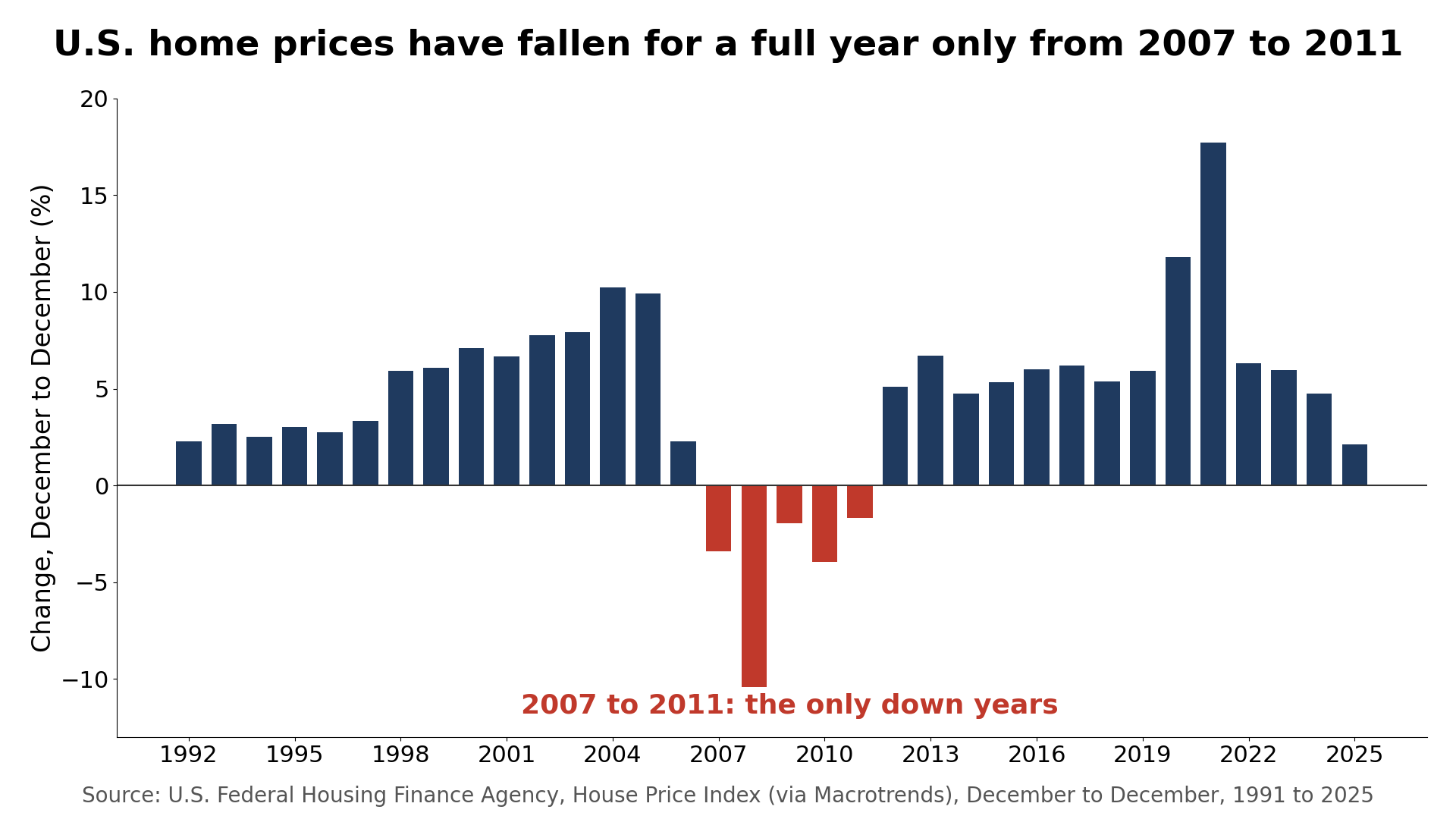
According to the Federal Housing Finance Agency's House Price Index, going back to 1991, prices have dropped for a full year only once: the stretch from 2007 to 2011, when the index fell about 21 percent peak to trough. Every other year since 1991 finished positive, including 2022, a year plenty of people remember as rough for buyers. Prices cooled, but they didn't fall.
That doesn't mean prices can't drop. It means waiting for a discount has not been a winning bet for most of the last three decades, and it's worth knowing that before you build a strategy around timing the market.
For Buyers: Where the Opening Is Right Now
Here's the part we think matters most for first-time buyers specifically. A seller sitting on a 3 percent mortgage has very little reason to sell right now. Giving that rate up to buy something else is a real cost, and a lot of sellers are choosing to stay put instead.
First-time buyers don't have that problem. There's nothing to give up. And in a lot of markets, inventory has grown because fewer move-up buyers are listing, which means more choices for buyers who are ready to move.
Add a down payment assistance program into the mix, and a first-time buyer can compete for homes that used to go straight to a cash offer or someone putting 20 to 30 percent down. That's a real shift. It doesn't mean rates are low. It means the competition looks different than it did two years ago, and that's worth a conversation if you've been sitting on the sidelines waiting for something to change.
For Sellers: Why Pricing Is the Marketing
If you're selling, here's the shift worth understanding. Pricing at what your neighbor sold for last year doesn't work the way it used to. Buyers and their agents have seen every listing in the area. They know what's overpriced, and they skip it.
There's a concept worth knowing here: the price itself is doing most of your marketing and most of your exposure. A home priced to attract showings gets seen, gets offers, and the market settles on the final number from there. A home priced to test the waters just sits, and a home that sits is expensive. It costs you carrying costs, it costs you leverage, and it often costs you the final sale price too.
That doesn't mean every home needs to be priced aggressively under the neighborhood. It means the right number depends on your home's condition, its location, and what's actually sold nearby recently, not on what felt right two years ago. That's a conversation, not a formula, and it's the one Sandy and I have with every seller before a home goes live.
What This Looks Like Locally
We're seeing this play out differently street by street across Evergreen, Conifer, Morrison, Golden, and Littleton. Some pockets have more inventory sitting than they did a year ago. Others are still moving fast the moment a home is priced right. That's part of why a national headline about the Fed or the housing market rarely tells you much about your specific street, your specific home, or your specific timeline.
If you're weighing a move anywhere in the foothills or west metro, the honest answer to "what's my home worth" or "what can I afford" depends on your street, not the national average. That's a conversation worth having before you make a decision either way.
The Bottom Line
A Fed rate hike is real news, but it's not mortgage news. Plan around the payment you can actually carry, not around what the Fed does next. If you're buying for the first time, ask what assistance programs you qualify for, because that can change what you're able to compete for. If you're selling, price to get showings, not to test a number, and let the market do the rest.
We go through all of this, plus clips from Fox News and CNBC on where the market stands right now, in the full video below.
Thinking about buying or selling in the Colorado foothills or west suburbs? We'd rather give you a straight answer than a sales pitch.
Call or text (720) 314-8462, email Tim@JonesTeamColorado.com, or book fifteen minutes at https://calendly.com/tim-jonesteam/15min.